

Training Kitchens for Precision, Consistency and Health
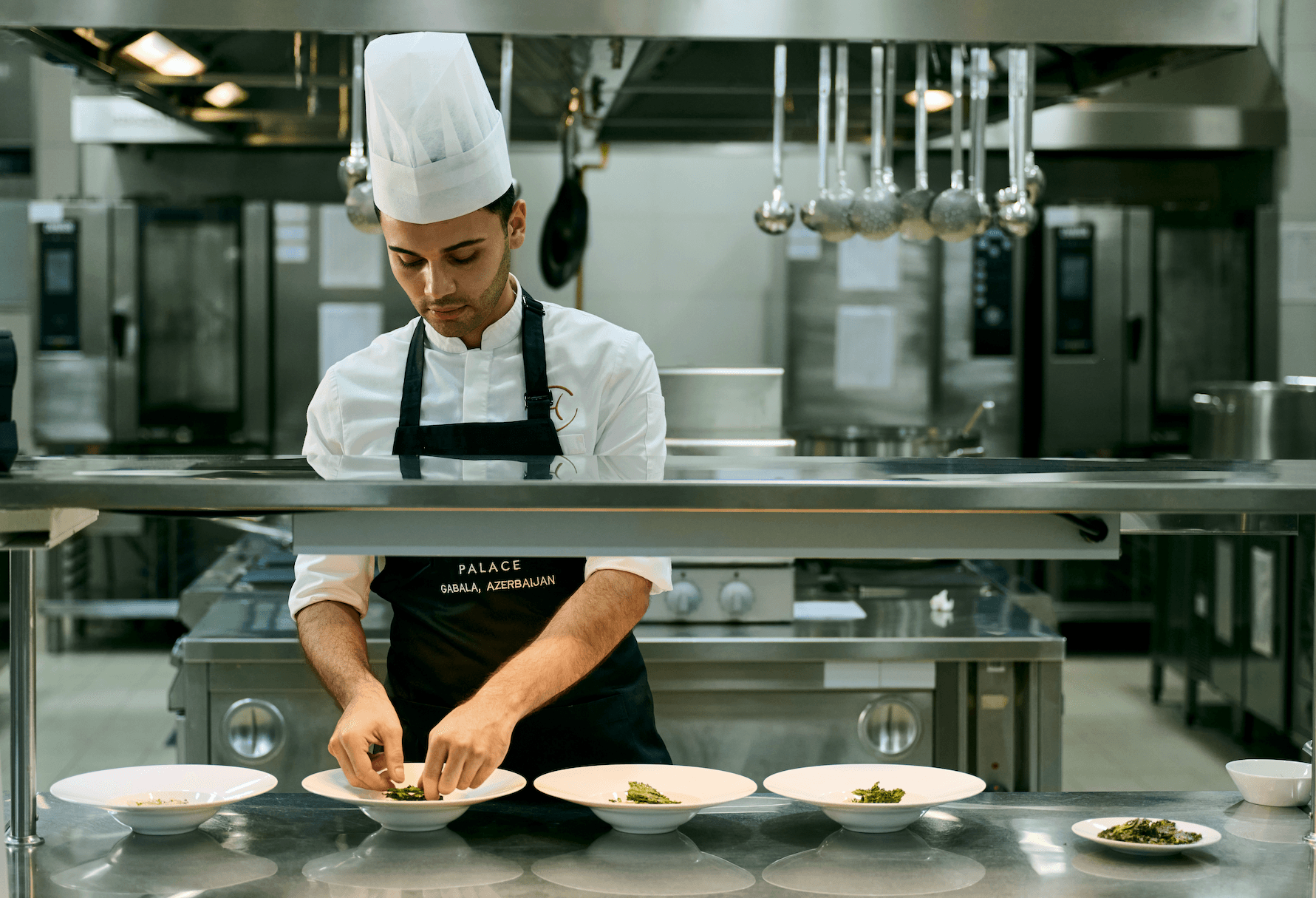
The Chenot Diet® is built around light, nutrient-respectful cooking that reduces dietary load and aids cellular clean-up. Every guest, whether in Weggis, Gabala, Portonovi, L’Albereta, or Marrakech, should immediately recognise the Chenot signature: precise portions that meet nutritional targets, gentle cooking that preserves vitamins and polyphenols, and plating that communicates clarity and elegance.
Yet menus must also reflect their terroir. As Moliteo explains, “Menus should never feel imported. We protect the nutritional framework and build flavour with what the land gives us.”
Training is entirely hands-on. At Chenot Palace Weggis, Moliteo works side by side with his team, demonstrating, cooking, and repeating until execution becomes second nature. At other properties, he runs intensive three- or four-day programmes: introducing the new menu, embedding its nutritional rationale, drilling mise en place and cooking techniques, and finishing with plating and service simulations. This cadence ensures that each property remains responsive to seasonal produce while maintaining consistency across locations.
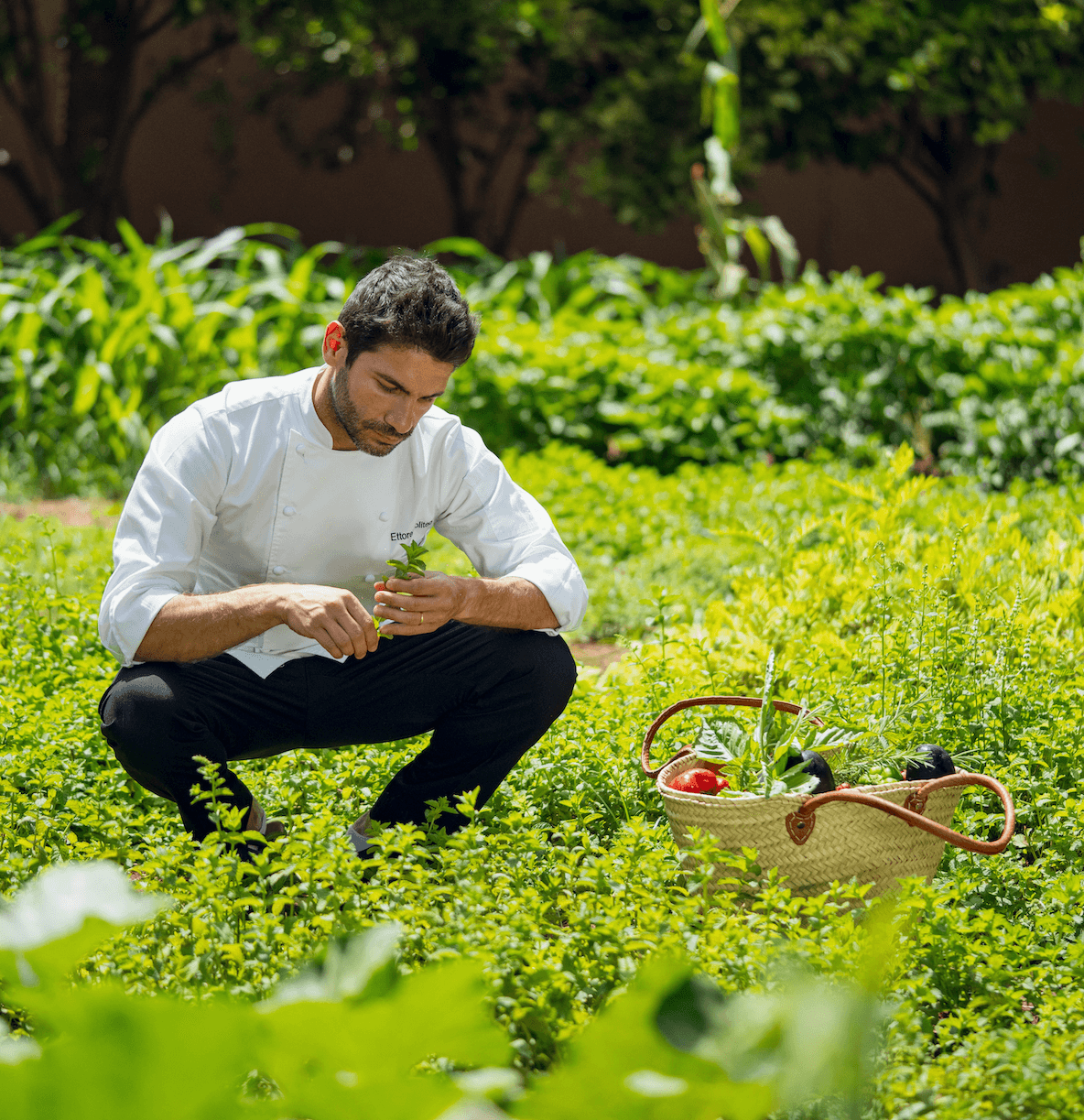
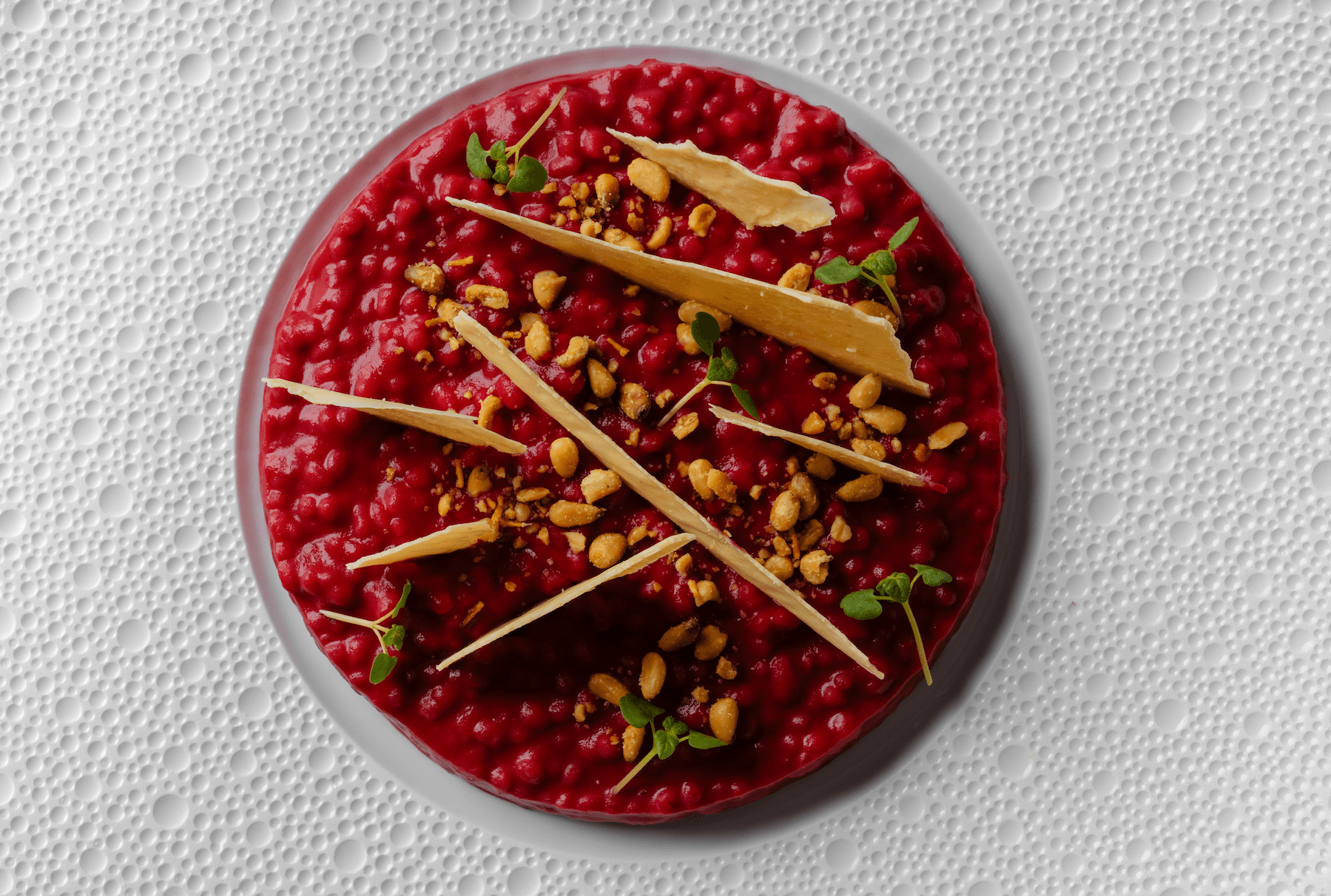
Three non-negotiables define Chenot kitchens: portion accuracy, nutrient-preserving technique, and plating discipline.
Recipes are constantly reviewed with nutritionists to adapt for individual needs, allergies, or intolerances, ensuring every plate aligns with the wider health programme. In a detox context, meals are also carefully timed to complement treatments and recovery phases, reinforcing the synergy between cuisine and therapy.
In luxury hospitality, “healthy food” is too often seen as a compromise. Chenot challenges that notion. With creativity and discipline, its cuisine demonstrates that healthy can also be elegant, indulgent, and deeply satisfying. Behind every dish stands a trained team, a tested process, and a clear purpose: to turn philosophy into practice, and practice into measurable change.
Ettore Moliteo, Executive Chef at Chenot, reveals how rigorous training and creativity ensure that every dish reflects the brand’s philosophy of precision and health.
How do you structure chef and kitchen training across the different properties?
When I arrive at a property, I head straight into the kitchen with the team. I present the new recipes, demonstrate the techniques, and then we prepare every dish together. The process is very hands-on – I want each chef not only to understand the recipe, but to feel confident executing it with precision. We also adapt menus to local seasonality and the best ingredients available, ensuring the food is always fresh, relevant, and true to the Chenot philosophy.
What is the frequency of the trainings?
Across Chenot’s international properties, I refresh menus twice a year, while at L’Albereta I follow the full four-season cycle with quarterly updates.
What does a typical training week with you look like?
In Gabala, Marrakech and Portonovi, trainings run over four days; at L’Albereta they last three, since I return more often. The first day is dedicated to introducing the new menu and its nutritional framework. The following two days are spent cooking together – reviewing every recipe, correcting details, and refining techniques. The final day focuses on plating, timing, and service simulations, ensuring the team can perform with confidence once guests arrive.
Which competencies are non-negotiable for every kitchen team?
For me, three things are non-negotiable: precise portions that meet nutritional targets, gentle cooking techniques that preserve nutrients, and elegant, consistent plating that ensures Chenot food always looks as good as it tastes.
How do you ensure that recipes, plating, and timing remain consistent for guests across Weggis, Gabala, Portonovi, L’Albereta, and Marrakech?
We use detailed recipe sheets and plating guides, but true standardisation happens through training. By repeating each dish together until it looks and tastes identical, chefs internalise the standard. This ensures that whether a guest dines in Weggis, Marrakech or Montenegro, the experience is unmistakably Chenot – consistent, precise, and beautifully presented.
Which KPIs do you track in the kitchen?
I focus on three core indicators: the quality of ingredients, accuracy in preparation, and timing – both during prep and in service. These reveal whether the team is truly upholding Chenot standards. Of course, I also track food costs and portion variance, but at the heart of it all lies precision, quality, and discipline.
Which feedback from doctors and nutritionists most influences adjustments to the menus?
I work closely with our nutritionists, who review every recipe to ensure it aligns with our nutritional framework. They also help manage allergies and intolerances, so every guest enjoys a safe, tailored experience. Their feedback often inspires small but meaningful adjustments to balance, flavour, or portioning.
How do you adapt sourcing and menus to local terroir while maintaining the Chenot identity?
For me, it’s essential that menus never feel “imported”. I design them around the best local and seasonal ingredients, while keeping the nutritional principles intact. This creates dishes that celebrate the terroir of each property but still carry the Chenot identity – light, nourishing, and elegant.
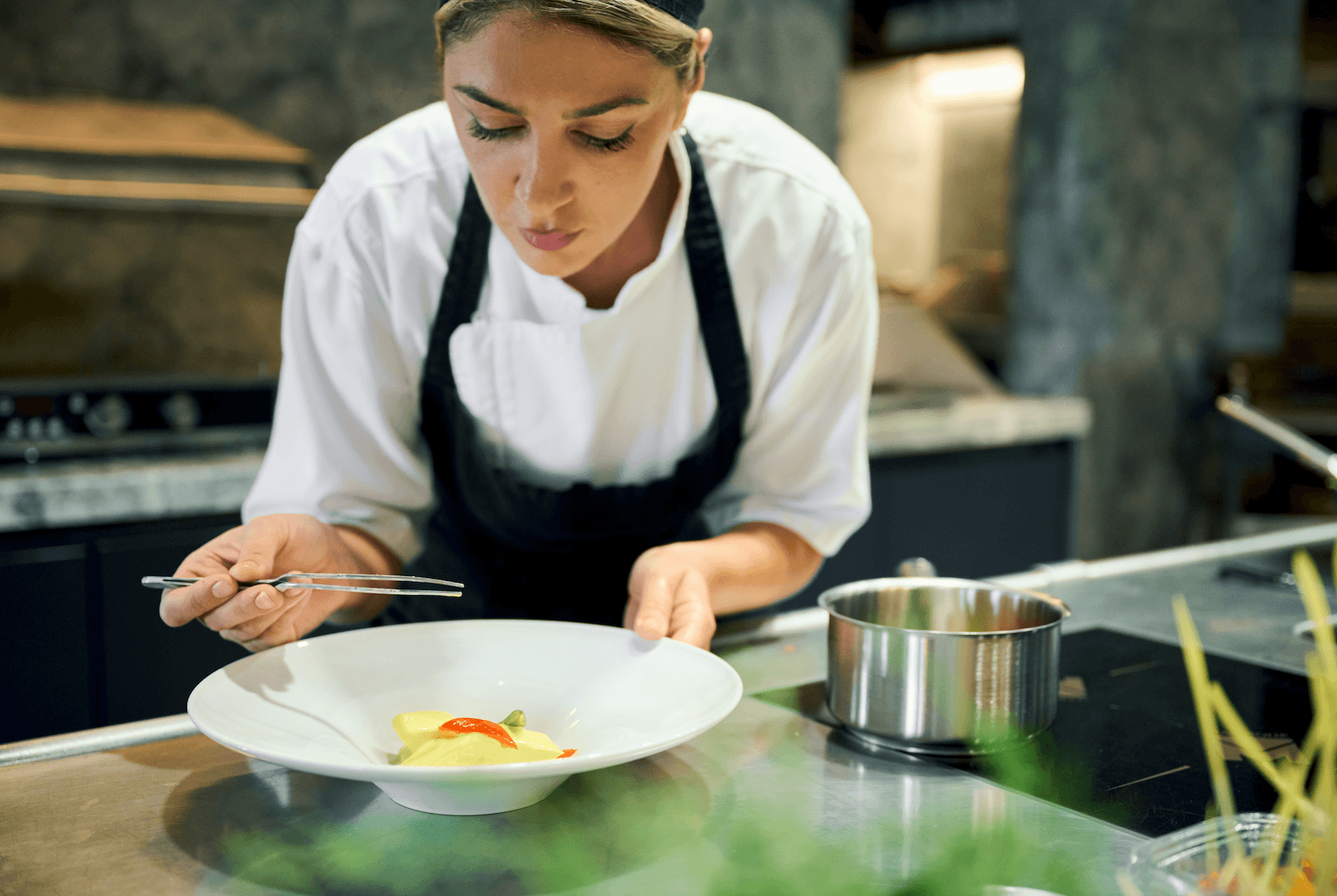
What do new chefs find most challenging to learn – and how do you help them overcome it?
New chefs often find the strict caloric framework, precise plating discipline, and plant-based approach a challenge – it’s a big shift from traditional fine dining. I support them by cooking side by side, showing how to build flavour and texture without heavy ingredients. Once they realise it’s possible, their motivation quickly follows.
Which new techniques or ingredients are you most excited to integrate into the Chenot kitchens?
I’m exploring short fermentations to enhance flavour and nutrient availability, functional fibres to support gut health and the gut–skin connection, and wild herbs and local plants to add authenticity, antioxidants, and aromatic depth. These innovations keep the cuisine fresh and forward-looking, while remaining true to the Chenot spirit.
If you could change one thing about the way luxury hospitality approaches “healthy food”, what would it be?
In luxury hospitality, healthy food is too often seen as a compromise. I see it very differently: with creativity and scientific discipline, healthy cuisine can be just as indulgent and elegant as fine dining. It doesn’t subtract – it elevates, adding a new level of refinement.

Detox Programme
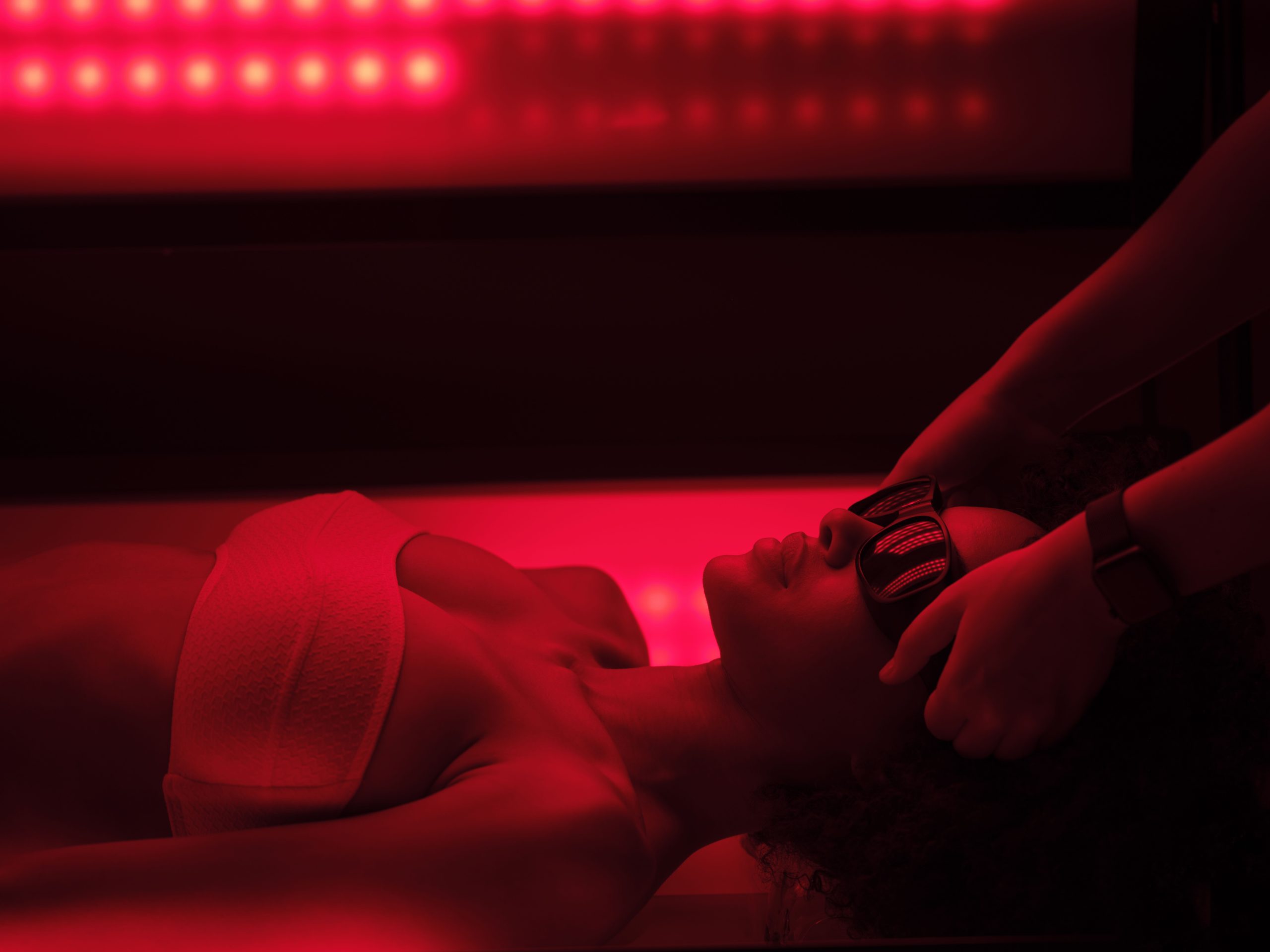
Our signature Chenot programme aims to induce a deep purification and detoxification of the body to eliminate toxins, increase vitality, reset energy levels and rebalance its physiology.
CHF 5’500
Detox Programme
Relax your brain, revitalise your body – Chenot’s Recover & Energise programme reduces chronic stress and fatigue which restores optimal energy levels.
CHF 6’400

Detox Programme
Chenot’s most intense health span enhancing programme combining our signature detox with high-impact rejuvenation to delay the onset of biological ageing.
CHF 7’100
Detox Programme
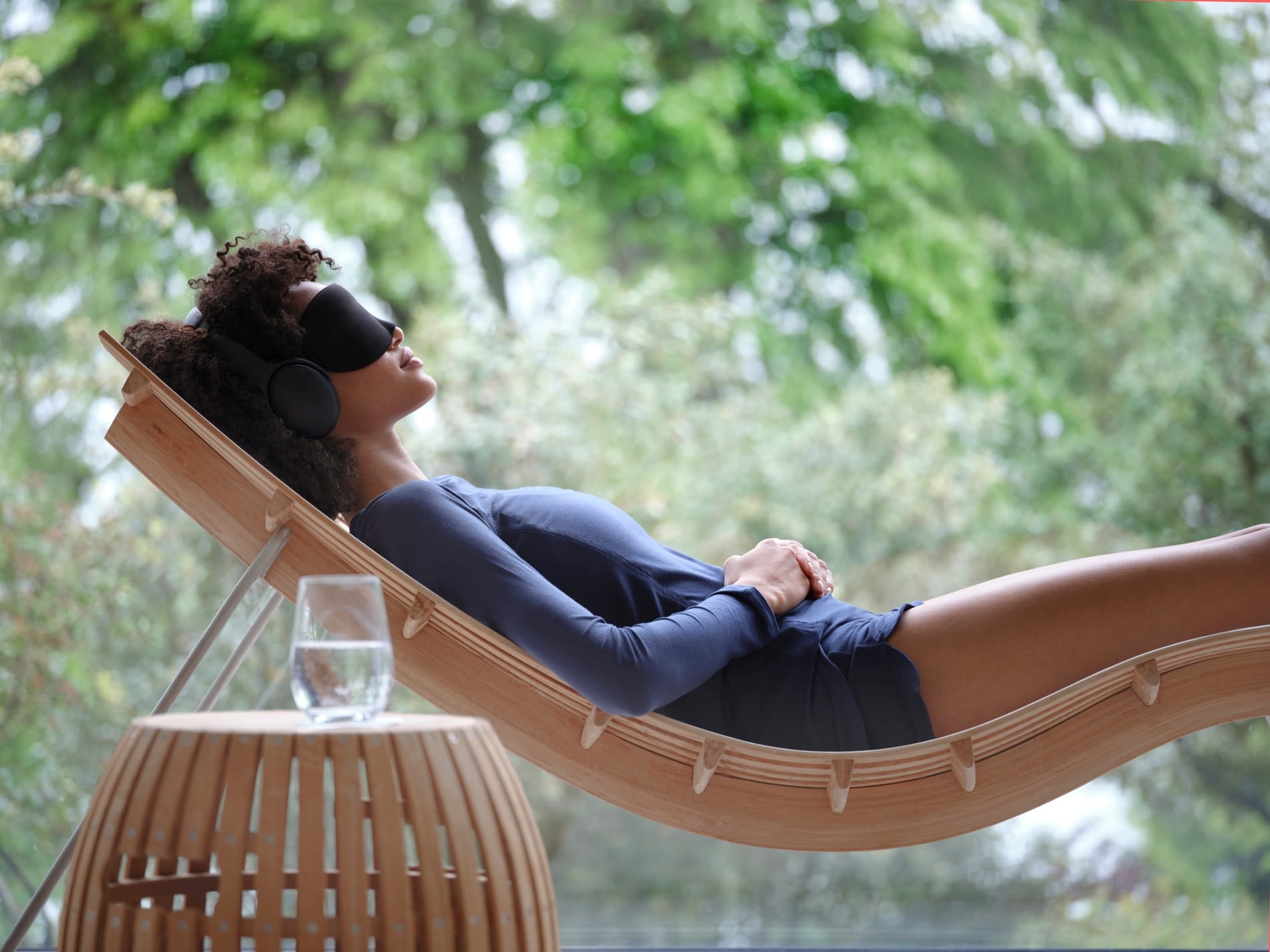
Restore natural sleep rhythms and accelerate recovery with targeted treatments timed to your chronotype – built on the extraordinary power of our Recover & Energise programme.
CHF 7’960

Screening & Optimisation
State-of-the-art medical diagnostics and functional testing for a precise and time-efficient overview of how your daily choices impact your health.
CHF 6’100